July 5, 2026.
As the United States celebrates its 250th anniversary, Americans are being reminded of the principles upon which the nation was founded: liberty, representation, accountability, and government by the people.
Across the country, elected officials are praising the freedoms guaranteed by the Constitution and honoring the generations who fought to preserve them. Yet one important part of the American story is often missing from these celebrations—the devastating impact that the nation's expansion had on U.S. First Nations peoples. Referred by some as "Indians" .
Long before the United States existed, U.S. First Nations governed themselves across this continent. The growth of America came at a tremendous cost to Tribal communities through warfare, forced removals, broken treaties, cultural destruction, and government policies designed to erase Native identity. Thousands of Native people died, and entire communities were displaced from lands they had occupied for generations.
Two hundred and fifty years later, many U.S. First Nations “Native” people continue to ask whether the promises of freedom and equality apply equally to them.
That question is not limited to federal and state governments. It is also being asked within Tribal governments themselves.
Among members of the Sault Ste. Marie Tribe of Chippewa Indians, concerns about representation, accountability, transparency, and member rights have become central issues in recent years. The debate surrounding proposed constitutional changes has highlighted a growing divide between Tribal leadership and many citizens who believe their voices are not being adequately heard.
Supporters of reform argue that changes are necessary to modernize Tribal government. Critics, however, have raised concerns that some proposals could reduce member influence, weaken checks and balances, and consolidate authority away from the citizens the government is supposed to serve.
Regardless of where members stand on specific constitutional provisions, the larger issue remains the same: every Tribal citizen deserves an equal voice in the future of the Tribe.
The right to question leadership is not disloyalty.
The right to demand transparency, equal rights to run for office, and to receive equal benefits regardless of their address is not an obstruction.
The right to vote, debate, and participate in Tribal government is not a privilege granted by elected officials—it is a fundamental right of Tribal citizenship.
Throughout American history, citizens have fought for representation and accountability. Those struggles helped shape the democratic institutions that Americans celebrate today. Tribal governments should embrace those same principles, not fear them.
Tribal sovereignty is one of the most important rights U.S. First Nations possess. It represents the ability of Tribal citizens to govern themselves according to their own values and traditions. But sovereignty ultimately belongs to the people, not to elected officials, departments, or governing boards.
A strong Tribal government is one that welcomes scrutiny, encourages participation, and remains accountable to its citizens.
Many Sault Tribe members believe that standard has not always been met. Concerns over access to information, transparency in decision-making, election processes, and the treatment of dissenting voices have fueled growing frustration among citizens who simply want to be heard.
As America marks 250 years since its founding, Tribal governments should take this opportunity to reflect on their own commitment to the principles they often demand from others.
Are members treated equally?
Are citizens provided with meaningful access to information?
Are elections conducted in a manner that promotes confidence and trust?
Do members have a genuine voice in decisions affecting the future of the Tribe?
These are not radical questions. They are the very questions Americans have asked for centuries.
The history of U.S. First Nations peoples referred to as the misappropriated label "Indians” is too often absent from national celebrations. So too are the concerns of Tribal citizens who seek greater accountability from their own governments.
As fireworks filled the sky of Independence Day, many Sault Tribe members are thinking less about the promises made in 1776 and more about whether those promises—representation, equality, and government by the people—are fully alive within their own Tribe today.
The pursuit of equal rights did not end 250 years ago. For many Tribal citizens, it continues today.
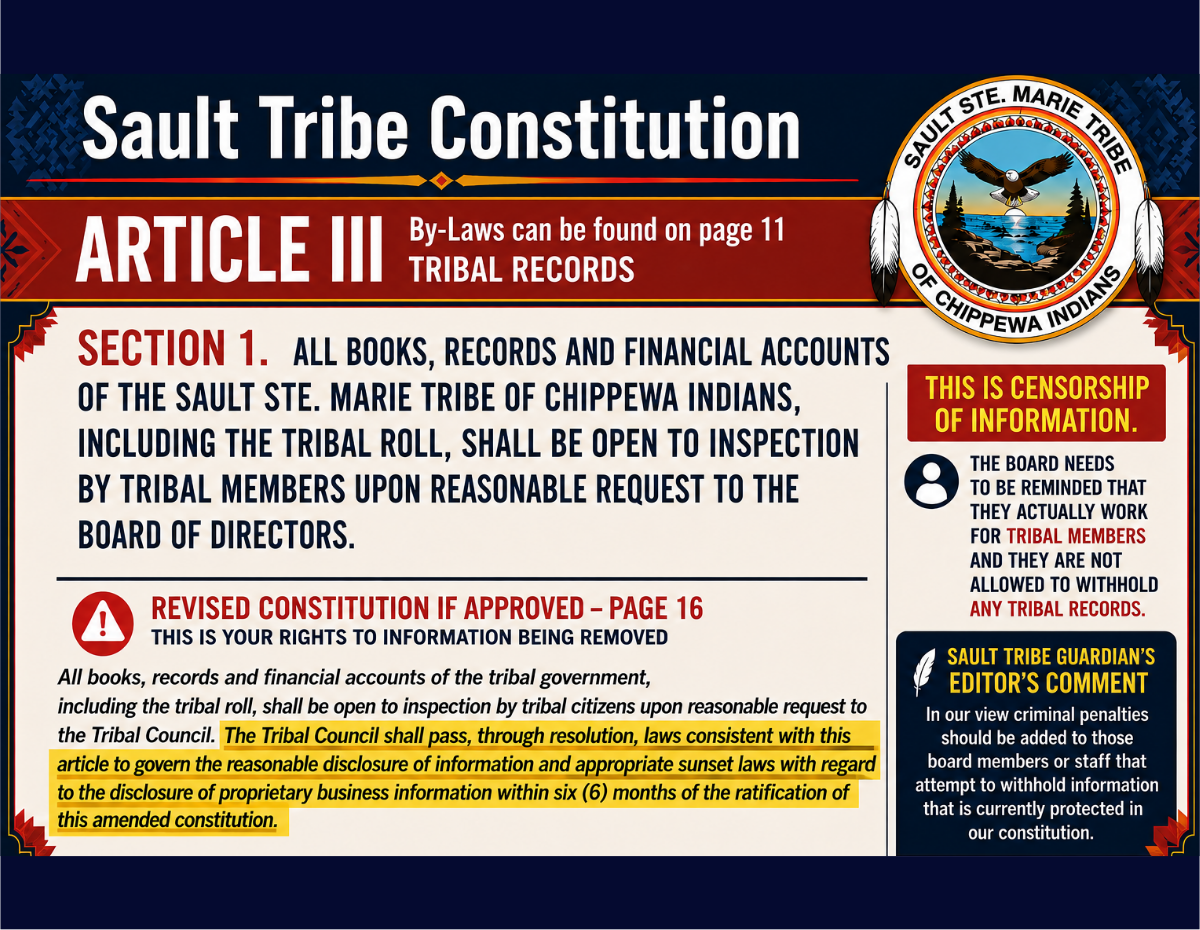
Vote No on the “Secretarial Election” unless they add EQUAL RIGHTS, allow each change to be voted on separately and remove the changes to the By-Laws Article III Section One.
Don’t be fooled by the new constitution amendment that is falsely advertised as only being a Three Branch Separation Amendment when in fact it is much more than that. It in fact removes Tribal Members’ Rights.