November 18, 2026.
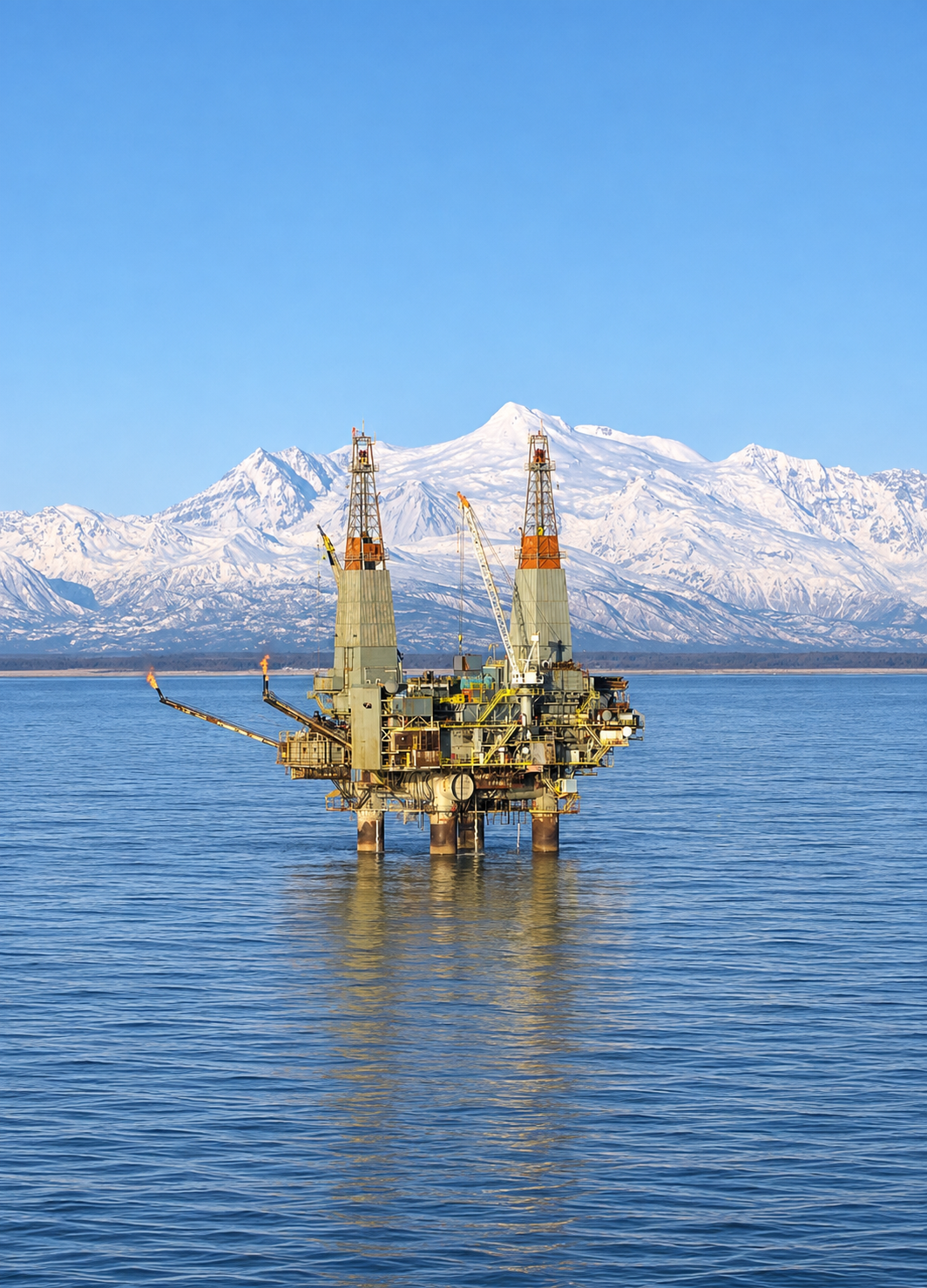
The U.S. Department of the Interior is moving forward with a federal program that could allow eligible decommissioned offshore oil and gas structures to remain in federal waters as permanent artificial reefs, potentially expanding marine habitat and recreational fishing opportunities while reducing decommissioning costs for offshore energy companies.
The Marine Minerals Administration (MMA) announced the proposed Federal Outer Continental Shelf Reef-in-Place Program in November 2026. The initiative is intended to establish a consistent federal framework for converting qualifying offshore structures into artificial reefs rather than requiring their complete removal.
The announcement follows Executive Order 14430, Restoring American Saltwater Angling and Recreation, signed by President Donald Trump on September 17, 2026.
Section 6 of the executive order directs the Interior Department to establish the federal program within 60 days. It authorizes the conversion of eligible decommissioned offshore oil and gas and other-use structures through reef-in-place, topple-in-place or other approved methods. Infrastructure associated with offshore wind energy facilities is excluded.
"Eligible offshore structures can continue to serve our coastal communities as artificial reefs that support marine habitat and expand fishing and recreational opportunities," said Mike Olsen, acting director of the Marine Minerals Administration.
Olsen said the agency wants input from states, tribes, fishermen, offshore operators and scientists as it develops the federal framework.
Building on Existing State Programs.
For decades, Gulf coastal states have operated Rigs-to-Reefs programs allowing certain decommissioned offshore oil and gas structures to become artificial reefs.
According to the Bureau of Safety and Environmental Enforcement (BSEE), more than 600 offshore platforms previously installed on the U.S. Outer Continental Shelf have been converted into artificial reefs in the Gulf of America.
All five Gulf Coast states—Alabama, Florida, Louisiana, Mississippi and Texas—have approved artificial reef plans. Louisiana and Texas are the primary participants in the existing Rigs-to-Reefs program because most offshore platforms are located in waters off those states.
Under the existing process, federal approval is required before an operator can leave a structure in place or convert it into a reef. Participating states must obtain the necessary permits and accept ownership and liability for the reefed structure after the operator completes the approved conversion and satisfies the required agreements.
The proposed federal initiative is intended to build on these established state efforts while providing a more consistent framework for reef projects across the Outer Continental Shelf.
Artificial reefs can provide habitat for fish and other marine organisms and support recreational fishing and diving. BSEE cites research from the Coastal Marine Institute indicating that a typical eight-leg offshore platform can provide habitat for approximately 12,000 to 14,000 fish.
However, the ecological benefits depend on the location, condition and characteristics of individual structures. Not every decommissioned platform is suitable for conversion.
Environmental Standards, Safety and Liability.
The proposed program will require standards for determining which structures qualify for conversion. Environmental conditions, structural integrity, navigation safety and national security will be among the considerations.
Under the existing BSEE Rigs-to-Reefs policy, structures must meet engineering and environmental standards, be stable and clean, and become part of an approved state artificial reef program.
Three primary approaches are used to convert offshore structures:
- Reef-in-place: The structure remains at its existing location, subject to applicable approvals and requirements.
- Topple-in-place: The structure is detached from the seabed and placed on its side to create artificial reef habitat.
- Partial removal: The upper portion is removed to an approved navigational depth, with the remaining structure serving as a reef.
The new federal initiative will also examine permitting, long-term liability and coordination with existing state programs.
These issues are particularly important because transferring ownership and liability can change who is financially responsible for maintaining and managing the structures after conversion.
Potential Financial Benefits for Oil Companies.
Expanding the Rigs-to-Reefs approach could provide substantial financial benefits to offshore oil and gas companies by reducing the costs associated with decommissioning aging platforms.
Under standard federal requirements, operators generally must permanently plug wells, remove offshore platforms and associated equipment, address pipelines and clear the seabed when production ends, unless an alternative is approved.
Decommissioning can be expensive, particularly for large platforms in deep water. A Congressional Research Service report published October 29, 2026, notes that removing all infrastructure associated with an offshore lease can cost tens of millions of dollars in shallow water and hundreds of millions in deep water.
Converting an eligible structure into an artificial reef can eliminate some of the expenses associated with removing, transporting and disposing of the infrastructure onshore.
The existing BSEE program provides a specific example of how the financial savings are divided.
If removing a platform would cost $800,000, but converting it into an artificial reef would reduce the cost to $400,000, the operator realizes $400,000 in gross cost savings.
Under the typical existing arrangement, half of those savings, or $200,000, is donated to the participating state's artificial reef program. The company retains the remaining $200,000.
This is an example provided by BSEE, not a guaranteed savings formula for every project. Actual costs and financial arrangements vary depending on the structure, location and reefing requirements.
The proposed federal program could expand these opportunities by establishing a consistent framework for qualifying structures across federal waters. However, the MMA has not announced a new financial-sharing formula or guaranteed additional savings for operators.
Who Assumes the Long-Term Responsibility?
The potential financial benefits also raise an important public-policy question: Does expanding the program shift some of the long-term environmental and financial responsibility for offshore infrastructure from private companies to states and, potentially, taxpayers?
Under the existing Rigs-to-Reefs program, participating states generally accept ownership and liability for reefed structures after the operator completes the approved conversion and fulfills the required agreements.
That arrangement can reduce a company's future obligations while transferring responsibility for the reef structure to the state.
The issue is particularly significant given the federal government's existing exposure to offshore decommissioning costs.
A Congressional Research Service report published October 29, 2026, found that the Department of the Interior reported approximately $129.9 million in uncovered liability for existing orphaned offshore facilities as of October 2026, after accounting for the financial assurances provided by operators.
The report also examined a much larger potential exposure. A 2024 Government Accountability Office assessment found that, as of June 2023, the federal government held approximately $3.5 billion in supplemental bonds against estimated decommissioning costs of $40 billion to $70 billion for offshore wells and platforms.
The CRS report calculated that the resulting uncovered exposure could be at least $36.5 billion if all operators failed to meet their decommissioning obligations.
That figure represents a hypothetical worst-case exposure, not an expected taxpayer expense. Federal liability would arise only if responsible current and predecessor operators failed to fulfill their obligations.
These figures concern broader offshore decommissioning liabilities, not the proposed Reef-in-Place Program specifically.
The new program's approach to liability will therefore be an important part of the federal rule-making and public discussion. The MMA is specifically seeking information about liability arrangements, environmental safeguards and coordination with existing state programs.
For coastal states and taxpayers, the central question will be whether the economic and recreational benefits of artificial reefs justify accepting long-term responsibility for infrastructure originally installed for private commercial operations.
Tribal Consultation and Marine Resource Protection.
The proposed program specifically identifies tribes as stakeholders from whom the MMA wants input.
Tribal participation is particularly relevant because offshore development and changes to marine habitats can affect fishing resources, coastal ecosystems, cultural resources and treaty-protected rights.
A November 2023 BSEE Tribal Engagement Fact Sheet documented the agency's previous efforts to strengthen government-to-government relationships with Tribal Nations, including consultation on offshore energy activities and development of tribal engagement policies.
That document predates the new Reef-in-Place initiative and does not establish that consultation on this particular program has occurred.
No specific Tribal Nation statement supporting or opposing the newly announced program has been identified.
As the proposal develops, important questions will include how Tribal Nations will participate in decisions, whether potential effects on treaty-protected fishing rights will be evaluated, and how cultural and environmental resources will be protected.
Meaningful government-to-government consultation will be important as the federal government considers changes affecting marine resources and offshore activities.
Public Comment Period and Next Steps.
The MMA says it will open a formal public comment period after its Request for Information is published in the Federal Register.
The regulatory tracking record identifies the request as RIN 1010-ZA04, titled Request for Information Regarding the Department of the Interior's Federal Outer Continental Shelf Reef-in-Place Program. The record shows that it was received for regulatory review on November 13, 2026, and remained pending review in the information available as of November 18. A public comment deadline has not been established in that record.
The September 17 executive order established a 60-day deadline for establishing the program, making November 16, 2026, the target date. The MMA's November announcement and the pending regulatory review of its information request make implementation and the timing of public participation important issues to follow.
Tribal governments, coastal communities, commercial and recreational fishermen, environmental organizations, marine scientists and offshore operators will have an opportunity to provide input once the formal notice is published.
The resulting framework could influence how aging offshore infrastructure is decommissioned and how federal waters are managed for marine habitat, fishing and recreation.