September 6, 2026.
Quebec mining dispute puts First Nations consent, environmental protection and resource development under scrutiny.
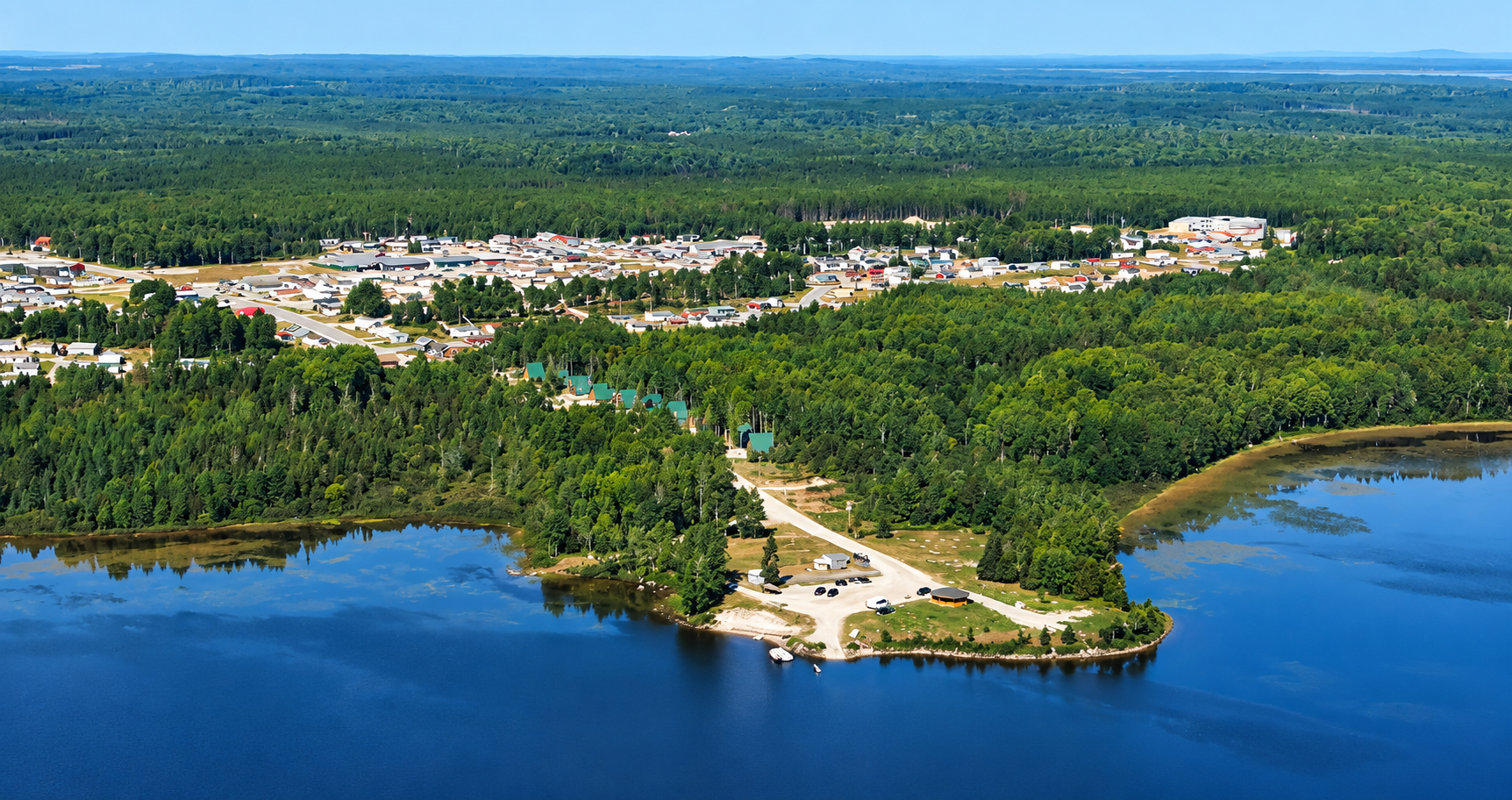
LAC SIMON, Quebec — The Lac Simon First Nation is taking legal and direct action to stop exploration work associated with the proposed Novador open-pit gold mine, arguing that the project is advancing on its ancestral territory without the community's consent.
The dispute has become one of the latest flash-points in Quebec over how mining projects are approved on First Nations territories and what role First Nations governments should have before exploration and development activities are authorized.
The Novador project is located about 400 kilometres northwest of Ottawa, near Val-d'Or, in an area where mining has been a major part of the regional economy for generations.
The project is currently in the exploration stage. Mining company Fresnillo has been conducting drilling and collecting core samples to determine the location and extent of gold deposits.
But Lac Simon Chief Lucien Wabanonik says the community has clearly opposed the project and did not provide consent for the work to proceed.
In May, members of Lac Simon travelled to the project site and delivered a notice demanding that activities stop. According to reporting by APTN and The Canadian Press, drilling subsequently stopped, and the First Nation later issued an eviction notice to Fresnillo.
“Work at this proposed mine has been at a standstill for weeks,” APTN reported in September, noting that the company had left thousands of rock-core samples at the site.
Legal challenge moves forward.
Lac Simon has taken its opposition beyond the project site and into the courts.
The First Nation filed a legal challenge concerning the Quebec government's authorization of exploration work at the site. APTN reported that Lac Simon filed for an injunction against Quebec's minister of Natural Resources and intends to seek judicial review of the authorization for the Novador project.
The First Nation argues that Quebec authorized exploration activities with impacts on its territory without obtaining its consent.
The dispute therefore goes beyond whether gold should be extracted. At its center is a larger question: who has the authority to make decisions about resource development on First Nations ancestral territories?
In June, Lac Simon joined with other Anishinabe chiefs and civil-society representatives in calling for changes to Quebec's mining-claims system.
The group argued that First Nations should have a meaningful role in decisions involving mining claims from the earliest stages of development, rather than being brought into the process after claims and exploration rights have already been granted.
The chiefs specifically called for respect for free, prior and informed consent and for First Nations governments to have a decisive role in decisions affecting their territories.
Fresnillo says it wants dialogue.
Fresnillo, the Mexican mining company now developing Novador, has disputed the characterization that it has ignored the community.
The company acquired the project after purchasing Probe Gold. According to The Canadian Press, Fresnillo said it had held exchanges and information sessions with people in the Lac Simon community since the beginning of the project.
Company representatives said they were sensitive to the position expressed by Lac Simon and wanted to continue discussions.
Lac Simon, however, says consultation is not enough when the community has already expressed opposition to the project.
“We are open to dialogue, but not to a process where decisions have already been made and work is carried on despite our opposition,” Wabanonik said in a statement reported by The Canadian Press.
Fresnillo and Quebec's Natural Resources Ministry did not respond to APTN's requests for interviews for its September report.
Environmental concerns.
For Lac Simon, the dispute is also about the potential environmental consequences of large-scale mining.
Community members have raised concerns about impacts to waterways, wildlife, hunting and the broader ecosystem that supports traditional activities.
APTN reported that hunters in the community say exploration drilling has already affected the area.
Paul Wabanonik, a Lac Simon hunter, told APTN that drilling and the presence of large quantities of core samples affect both hunters and wildlife.
Chief Wabanonik also pointed to the region's history of mining-related environmental damage as a warning about what could happen if another large project moves forward without adequate safeguards.
One example highlighted in the reporting is Askigwash Island, traditionally known as Siscoe Island, near Val-d'Or. Mining activity there more than a century ago resulted in tailings being deposited into the lake, and environmental testing continues to show contamination in the area.
For Lac Simon leaders, that history reinforces their concern that decisions made today could affect generations to come.
A major mining region.
The conflict is unfolding in one of Quebec's most important mining regions.
According to APTN, more than 30 gold mines operate across Quebec, with a significant number located around Lac Simon. The community says the concentration of mining projects around its territory has created cumulative impacts that cannot be considered one project at a time.
The Novador project itself is significant.
Project documents previously filed by Probe Gold envisioned both open-pit and underground mining operations, with production of approximately 15,500 to 19,200 tonnes of ore per day over an anticipated 14-year operating period.
Fresnillo acquired the project after purchasing Probe Gold in 2025 in a transaction valued at approximately C$780 million, according to Investing News Network. The project contains a reported measured and indicated resource of 3.55 million ounces of gold.
Economic benefits versus community concerns.
The mining industry is a major economic driver for nearby Val-d'Or, and municipal officials have expressed support for development in the region.
Val-d'Or Mayor Serge Allard told APTN that mining is central to the regional economy.
But even supporters of the project are watching the potential economic benefits closely. Allard said an important question is whether Novador will generate jobs for people living in Val-d'Or or rely heavily on workers brought in from elsewhere.
That economic argument is being weighed against Lac Simon's concerns about environmental impacts, traditional land use and decision-making authority.
For the First Nation, the question is not simply how many jobs a mine could create.
It is whether a project of this scale should be permitted to proceed when the affected First Nation says it has not consented to the development.
A broader Quebec debate.
The Lac Simon dispute comes as Quebec faces growing pressure from First Nations leaders over how natural-resource development is handled.
In June, several Anishinabe chiefs joined Lac Simon in calling on the Quebec government to reform the mining-claims system and give First Nations a stronger role in determining what happens on their ancestral territories.
The chiefs argued that the system should not treat First Nations as stakeholders who are consulted after decisions have been made, but as governments whose participation is required at the earliest stages of development.
The issue has also intersected with Quebec's political debate over resource development.
In August, Quebec's Coalition Avenir Québec government announced plans to double a revenue-sharing budget for natural-resource regions from C$38 million to C$76 million beginning in spring 2027.
Lac Simon criticized the announcement because, according to APTN, the First Nation said First Nations were not included in the proposed revenue-sharing approach.
That disagreement illustrates a larger issue: First Nations leaders are increasingly seeking not only consultation and economic benefits, but a direct role in determining whether and how resource development occurs on their territories.
The dispute is far from over.
For now, the Novador project remains at the center of a legal and political dispute between Lac Simon, Quebec and Fresnillo.
The First Nation's eviction notice halted exploration activity, while its court action challenges the government's authorization of exploration work.
Fresnillo says it wants to continue dialogue with the community.
But Lac Simon leaders have made clear that they do not consider consultation alone sufficient.
Chief Wabanonik told APTN that the community would prefer to protect living ecosystems rather than allow another generation to inherit environmental damage from mining.
“We prefer to respect the living instead of the dead,” he said, emphasizing the importance of protecting land and life rather than focusing solely on the value of minerals beneath the ground.
The outcome of the Lac Simon challenge could therefore have implications well beyond one gold project.
At stake is a question facing communities across Canada as demand for critical minerals and other natural resources increases: how can governments and companies pursue economic development while respecting First Nations rights, environmental responsibilities and the authority of First Nations governments over their territories?
For Lac Simon, the answer begins with having a meaningful voice before development decisions are made — not after.
What happens next.
The legal proceedings involving Lac Simon and Quebec will determine whether the government's authorization of exploration activities can withstand the First Nation's challenge.
Meanwhile, the broader debate over mining claims, consultation, consent and revenue sharing is likely to continue as Quebec seeks to expand resource development.
For Lac Simon, however, the position remains clear: the community does not want the Novador project to proceed without its consent.
The dispute now moves into the courts and the political arena, where its outcome could help shape the future relationship between First Nations governments, Quebec and the mining industry.