August 22, 2026.
Canada is once again debating whether a new oil pipeline to the West Coast is worth the enormous financial, environmental and political costs.
The debate intensified in July when Alberta formally proposed a new pipeline capable of carrying up to 1 million barrels of crude oil a day from the Edmonton area to the British Columbia coast. The proposal comes as Canada seeks to reduce its dependence on the U.S. market and expand access to customers in Asia and elsewhere.
A recent Angus Reid Institute poll found that 63% of Canadians support the proposed pipeline. Economic considerations appear to be a major reason: respondents cited the importance of oil to Canada's economy, the need to diversify export markets and potential job creation.
But public support becomes more complicated when Canadians are asked who should pay for the project.
The proposed pipeline is estimated to cost between C$35.2 billion and C$43.7 billion. Under the current proposal, the governments of Canada and Alberta would hold a majority interest, raising questions about how much financial risk ultimately would be carried by taxpayers. A separate poll commissioned by the Pembina Institute found that 61% of Albertans opposed using taxpayer money to finance a new pipeline.
The experience of the Trans Mountain expansion illustrates the issue. The project ultimately cost approximately C$34 billion, far above its original estimates. While Trans Mountain reported C$556 million in net income in 2025, critics have pointed out that the project's construction debt and interest obligations complicate claims about its overall profitability.
Supporters argue that looking only at pipeline-company profits misses the broader economic impact. Increased access to overseas markets can improve prices received for Canadian oil, while oil production generates taxes, royalties, employment and other economic activity.
That argument is particularly important to Alberta, where oil production is a major part of the provincial economy.
First Nations perspectives add another layer.
For First Nations, however, the pipeline debate is not simply about whether a project makes economic sense.
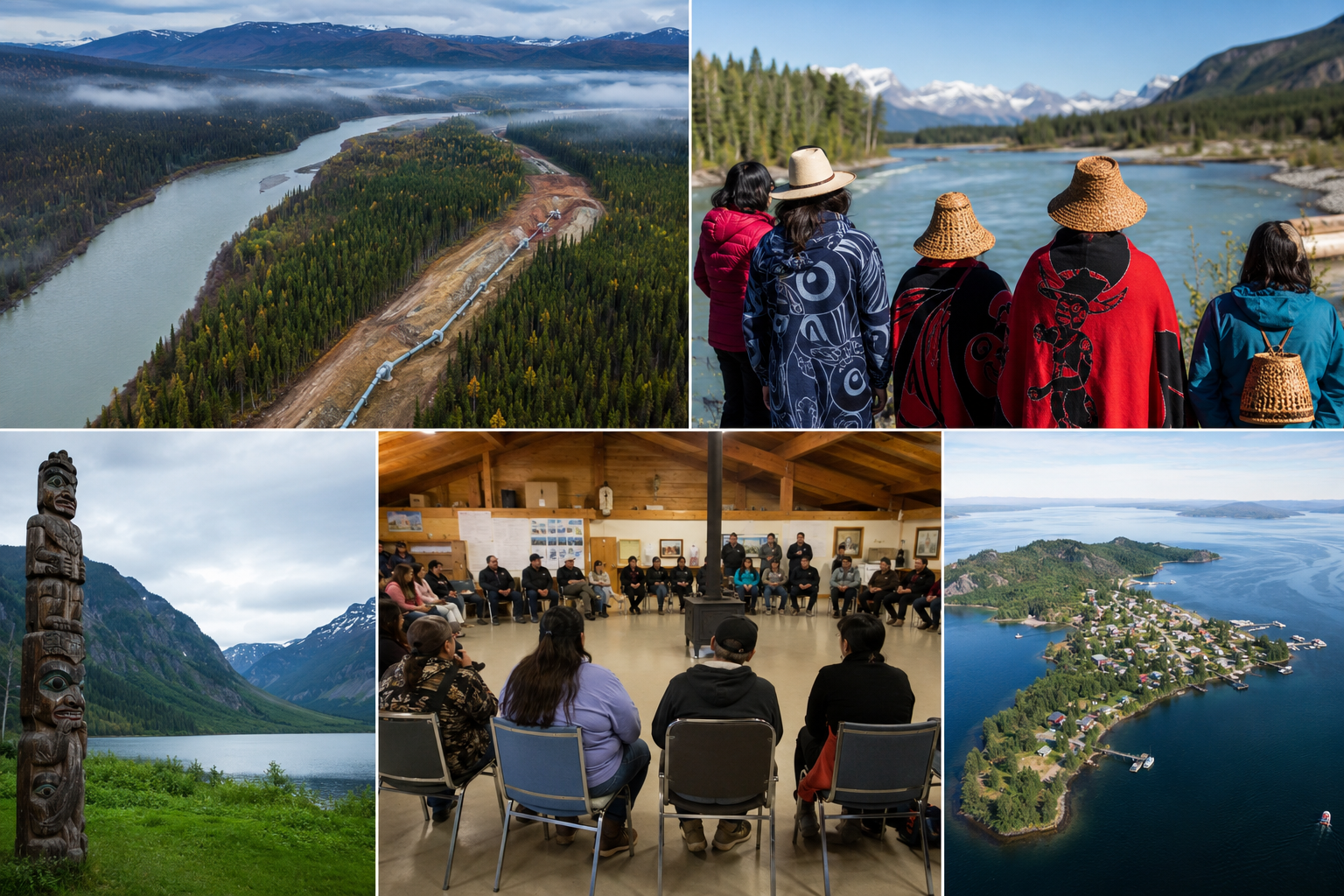
A proposed route from Alberta to the British Columbia coast could cross or affect the traditional territories of numerous First Nations. That means questions about land, water, wildlife, treaty rights, jurisdiction and economic participation are central to the discussion.
Canadian law recognizes the federal government's duty to consult and, where appropriate, accommodate Indigenous groups when government decisions could adversely affect established or potential Aboriginal or treaty rights.
That consultation requirement is particularly significant because First Nations do not have a single position on pipelines.
Some First Nations have opposed specific pipeline projects because of concerns about environmental impacts, threats to water and wildlife, and the potential infringement of their rights and authority over their territories.
Other First Nations have pursued ownership and economic participation in pipeline and energy infrastructure, viewing investment and ownership as a way to create long-term revenue, employment and greater economic independence.
The Canada Energy Regulator reported in February that Indigenous communities had acquired ownership interests in more than 5,000 kilometres of operating pipelines across Canada since 2021.
That changing approach is important. For some First Nations, the question is not simply whether a pipeline should exist, but whether communities whose territories are affected should have meaningful decision-making authority and an opportunity to share in the economic benefits.
Alberta's government has specifically promoted Indigenous co-ownership of its proposed West Coast pipeline. The province says the Alberta Indigenous Opportunities Corporation could help support Indigenous ownership and long-term economic participation.
But economic participation does not eliminate concerns about consultation or sovereignty.
The proposed pipeline has already generated criticism from First Nations leaders who said they were not adequately involved before governments announced the Canada-Alberta agreement that opened the door to the project. Treaty 6 Nations, for example, expressed disappointment about not being included beforehand while also indicating an interest in discussing future economic opportunities.
That tension illustrates why the First Nations perspective cannot be reduced to either "pro-pipeline" or "anti-pipeline."
The environmental question
There is also a larger question about whether expanding Canada's oil export infrastructure makes economic sense over the long term.
The proposed pipeline would require increased oil production to operate at full capacity. Alberta currently produces more than 4 million barrels of oil per day, while the province's existing pipeline systems have combined capacity of approximately 5.4 million barrels per day.
At the same time, international energy markets are changing. The International Energy Agency has projected that global demand for oil used as fuel could peak as early as 2027, creating uncertainty about the long-term market for expanded oil-sands production.
Pipeline supporters counter that global oil demand will not disappear quickly and that Canada needs reliable access to international markets. They argue that if Canadian oil is going to be produced, having multiple export routes reduces Canada's dependence on a single customer — particularly the United States.
Critics argue that committing tens of billions of public dollars to infrastructure designed to support decades of fossil-fuel production could leave taxpayers exposed if demand declines faster than expected.
For First Nations, the climate debate also intersects with concerns about protecting lands and waters that support communities, cultures and traditional ways of life.
A decision bigger than a pipeline
Canada's pipeline debate is therefore about more than steel, oil and construction costs.
It is a debate over Canada's economic future, its relationship with the United States, the role of government investment, climate policy and the country's obligations to First Nations.
For some Canadians, a new pipeline represents economic independence and an opportunity to strengthen Canada's position as a global energy supplier.
For others, the project represents an expensive investment in an industry facing an uncertain long-term future.
And for First Nations whose territories could be affected, the central questions may be even more fundamental: Who makes the decisions? Who bears the risks? Who receives the benefits? And will governments respect First Nations rights and jurisdiction throughout the process?
The proposed West Coast pipeline has not yet resolved those questions.
Until it does, Canada's pipeline debate is likely to remain as much about who pays, who benefits and who decides as it is about moving oil.