August 22, 2026.
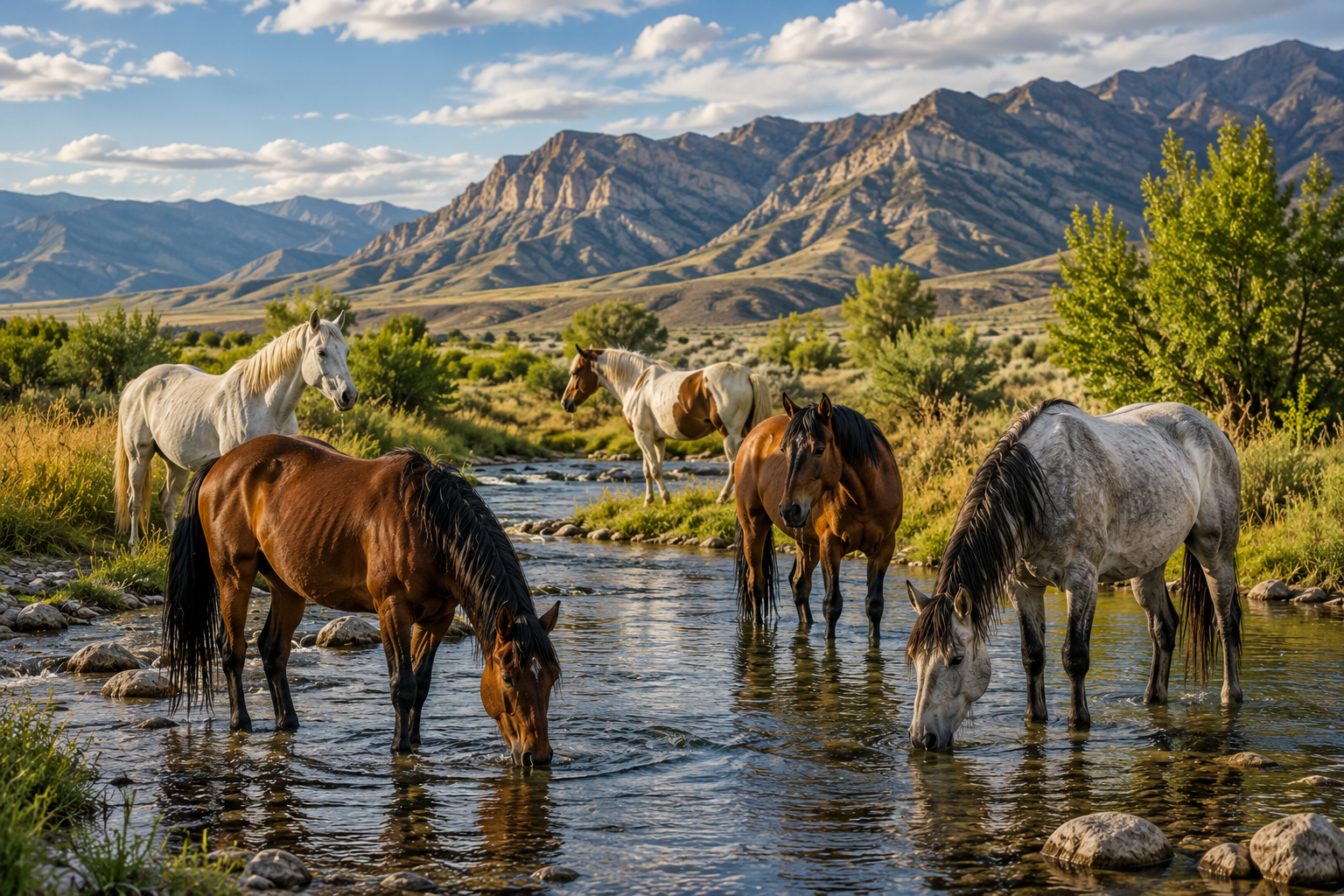
Wild horses remain at the center of a contentious debate over how America's public lands should be managed. Federal land managers, ranchers, conservationists, animal-welfare advocates and U.S. First Nations often have different views on how many horses the land can support and how populations should be managed.
For U.S. First Nations, the issue can carry an additional cultural dimension. Horses have become an important part of many Tribal communities, while excessive horse populations can also affect water, vegetation, wildlife and culturally important landscapes.
There is no single U.S. First Nations position on wild horse management.
A population growing beyond federal targets.
The Bureau of Land Management estimates that 85,466 wild horses and burros were living on BLM managed lands as of March 1, 2026. The agency's maximum Appropriate Management Level is 25,592 animals.
The BLM says wild horse and burro populations can double in four to five years because they have few natural predators. When populations exceed available forage and water, the agency says rangeland health and animal welfare can suffer.
In June 2026, the BLM began seeking public input on an environmental review examining management tools including gathers and fertility-control treatments.
Why the BLM supports active management.
The BLM says population management is necessary to protect horses, wildlife habitat, water and vegetation.
Management can include removing horses from the range, adoption and placement programs, and fertility-control treatments designed to slow population growth.
The agency reported removing 7,853 wild horses and burros from the range and administering 921 fertility-control treatments during fiscal year 2025.
Federal officials argue that removing excess animals can prevent conditions in which horses compete for limited food and water.
Why advocates oppose large-scale removals.
Wild horse advocates generally favor keeping more horses on the range and reducing reliance on gathers.
Many support expanded fertility-control programs, arguing that slowing reproduction could reduce the need for repeated removals.
Advocates also question whether federal population targets accurately reflect the ecological conditions of individual herd areas.
The 1971 Wild Free-Roaming Horses and Burros Act established federal protections for wild horses and burros and directed the government to manage them as components of public lands.
U.S. First Nations perspectives.
Tribal perspectives add another dimension to the debate.
Horses became deeply integrated into many Native communities after their introduction to North America, influencing transportation, trade, hunting and cultural traditions. Horse culture remains important in many Tribal communities today.
But Tribal Nations do not share a single position on wild horses.
Federal environmental records show that some Tribes have supported gathers because of concerns about water, vegetation and cultural resources. Others have opposed removals and emphasized their cultural relationships with horses.
In California, members of the Utu Utu Gwaitu Paiute Tribe and Mono Lake Kootzaduka'a Tribe have opposed federal plans to remove wild horses in the Mono Lake region and emphasized the horses' cultural significance.
By contrast, federal records show the Susanville Indian Rancheria and Washoe Tribe of Nevada and California have supported certain gathers because of concerns about environmental and cultural-resource impacts.
Other Tribes, including the Pit River Tribe, Pyramid Lake Paiute Tribe, Summit Lake Paiute Tribe, Fort McDermitt Paiute and Shoshone Tribe, Winnemucca Indian Colony and Reno-Sparks Indian Colony, have been involved in federal consultation concerning wild horse management in Nevada and California.
In Idaho, the Shoshone-Paiute Tribes of the Duck Valley Indian Reservation have participated in consultation concerning wild horse management and supported managing populations within established herd areas.
These differences demonstrate why it is misleading to describe a single "Tribal position" on wild horses.
Tribes and federal consultation.
Wild horse management can affect resources and landscapes that have cultural importance to Tribal Nations, making government-to-government consultation an important part of federal decision-making.
The Department of the Interior says consultation is intended to honor the federal government's nation-to-nation relationship with Tribal Nations and provide opportunities for Tribal governments to influence decisions affecting their interests.
For some Tribes, consultation is also an opportunity to propose alternatives to the traditional debate over whether horses should simply be removed or left unmanaged.
Fertility control and possible common ground.
Fertility control may provide one potential area of agreement.
The BLM already uses fertility-control treatments in some herd areas. Supporters say expanding those programs could slow population growth while allowing more horses to remain on the range.
The BLM, however, says fertility control cannot immediately address herds that are already far above the capacity of their habitat.
A debate without a single answer.
The wild horse controversy is ultimately about how public lands should be managed and how competing interests can be balanced.
Federal officials emphasize ecological health, animal welfare and their legal responsibility to maintain appropriate herd levels.
Wild horse advocates emphasize keeping horses free and reducing removals. Ranchers and other public-land users point to competition for forage and water.
U.S. First Nations bring perspectives shaped by sovereignty, cultural resources, ancestral connections to the land and, in many communities, longstanding relationships with horses.
Those perspectives do not always agree.
As the BLM continues its review of wild horse management tools, the challenge will be developing policies that protect healthy ecosystems and horses while giving Tribal Nations and other affected communities a meaningful voice in decisions involving public lands.
The central question remains: How can wild horses remain part of the Western landscape without compromising the health of the land, wildlife, water resources and the communities connected to them?